Choose Around The Traffic Pattern
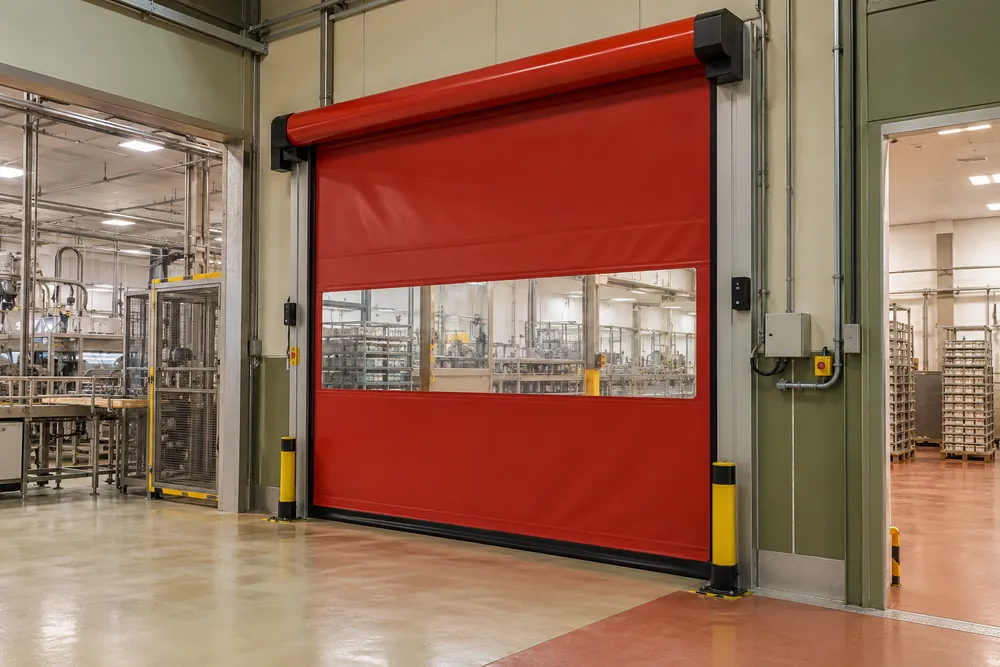
A high-speed door can reduce the time an opening stays exposed during regular goods movements. It may suit production routes, internal warehouse divisions and selected external openings. The useful starting point is the journey through the door, including who uses it and what happens on either side.
Count the operating pattern in practical terms: busy dispatch periods, forklift movements, delivery windows and staff crossings. A door that is fast on paper may still slow operations if the activation zone is poorly placed or if vehicles queue in front of it. Consider the route as a system rather than choosing by opening speed alone.
Our Liverpool enquiries cover new installations and replacement of doors that no longer suit the traffic. Photographs of both approaches and a description of the goods handled are useful. State whether the opening is internal, exposed to the weather or connected to a controlled environment.
Curtain Construction And Operating Conditions
Flexible curtains can suit internal openings where vehicles pass frequently. Rigid or insulated designs may be more appropriate where external security or thermal performance is also needed. The specification must account for the available space, wind pressure, temperature range and cleaning regime.
A production area handling food or sensitive materials may have particular hygiene and washdown requirements. Materials, enclosure protection and access for cleaning must be agreed with the responsible site team. A general-purpose industrial door should not be described as suitable for a specialist environment without checking the actual requirements.
Some flexible designs can recover after certain minor impacts, but the limitations depend on the product. Recovery does not make collision acceptable or remove the need for inspection. Report impacts and check the curtain, guides and protective devices before normal operation resumes.
Activation And Protection Work Together
Radar sensors, induction loops, pull cords and access-control commands can each have a role. The selected method needs to distinguish intended traffic from passing movement where possible. Poorly adjusted activation can leave the door cycling unnecessarily or opening into a busy crossing point.
Presence detection and other protective measures need assessment against the complete door and its use. An activation sensor is not automatically a safety device. The installer should explain how people are protected at the closing edge and around the guides, including during unusual but foreseeable use.
Think about loss of power and faults before ordering. Staff need a clear procedure for an unavailable opening, including alternative routes and any manufacturer-provided manual arrangements. Routine operation must not depend on defeating interlocks or keeping a safety circuit bypassed.
A Site-Led Installation Process
The survey records clear opening dimensions, fixing surfaces, power provision and approach routes. We also ask about the environment on each side, any pressure difference and whether a second door is needed for security outside operating hours. Those answers shape the specification and control sequence.
Installation planning should allow safe working access without exposing staff to the work area. Once fitted, commissioning checks direction, limits, activation zones and protective responses. The site team should receive instructions that describe normal use, fault reporting and permitted operator checks.
Where heat retention is the main concern, compare a high-speed solution with an insulated sectional overhead door. They solve different operating needs. In some buildings both are used, with the operating relationship defined so they cannot interfere with one another.
- Review traffic, environment and approach routes on both sides.
- Specify the curtain, controls and protection for the opening.
- Install within an isolated work area and set activation zones.
- Test the operating sequence and explain use and fault reporting.
Budgeting And Maintaining Performance
Opening size, curtain type, drive duty, controls and environmental requirements affect cost. Specialist sensors, interlocks and changes to the surrounding opening can alter the installation scope. Ask which commissioning records, instruction documents and operator familiarisation are included.
Frequent operation makes maintenance access and parts support important purchasing questions. Keep the operating log, report repeated faults and follow the manufacturer inspection guidance. Our industrial door maintenance service covers planned checks for commercial door assets, with the schedule based on use and risk.
Safety And Your Responsibilities
The Provision and Use of Work Equipment Regulations 1998 (PUWER) and the Workplace (Health, Safety and Welfare) Regulations 1992 are relevant to commercial door management. The dutyholder should establish what applies to the equipment and keep appropriate inspection and maintenance arrangements. See HSE work equipment guidance.
BS EN 12453:2017+A1:2021 addresses safety in use of power-operated doors. It informs specification and assessment, rather than replacing a site risk assessment or acting as an accreditation. Ask the proposed installer how the protective measures and testing relate to your door and its users.
Your Questions Answered
Can A High-Speed Door Provide Overnight Security?
A high-speed door provides overnight security only where the specific product and installation are designed for that purpose. Many flexible internal doors are intended for environmental separation and traffic flow. A separate security shutter or suitable rigid door may be needed, with the relationship between the doors considered during the survey and commissioning.
Will A High-Speed Door Reduce Heat Loss?
A high-speed door can help limit the time an opening stays exposed, which can support temperature control in the right setting. The outcome depends on traffic levels, activation, draughts and the building itself. Ask for a specification based on your operating pattern rather than relying on a general energy-saving claim or an assumed payback period.